ServicesCommercial Junk Removal
Commercial Junk Removal in Sacramento
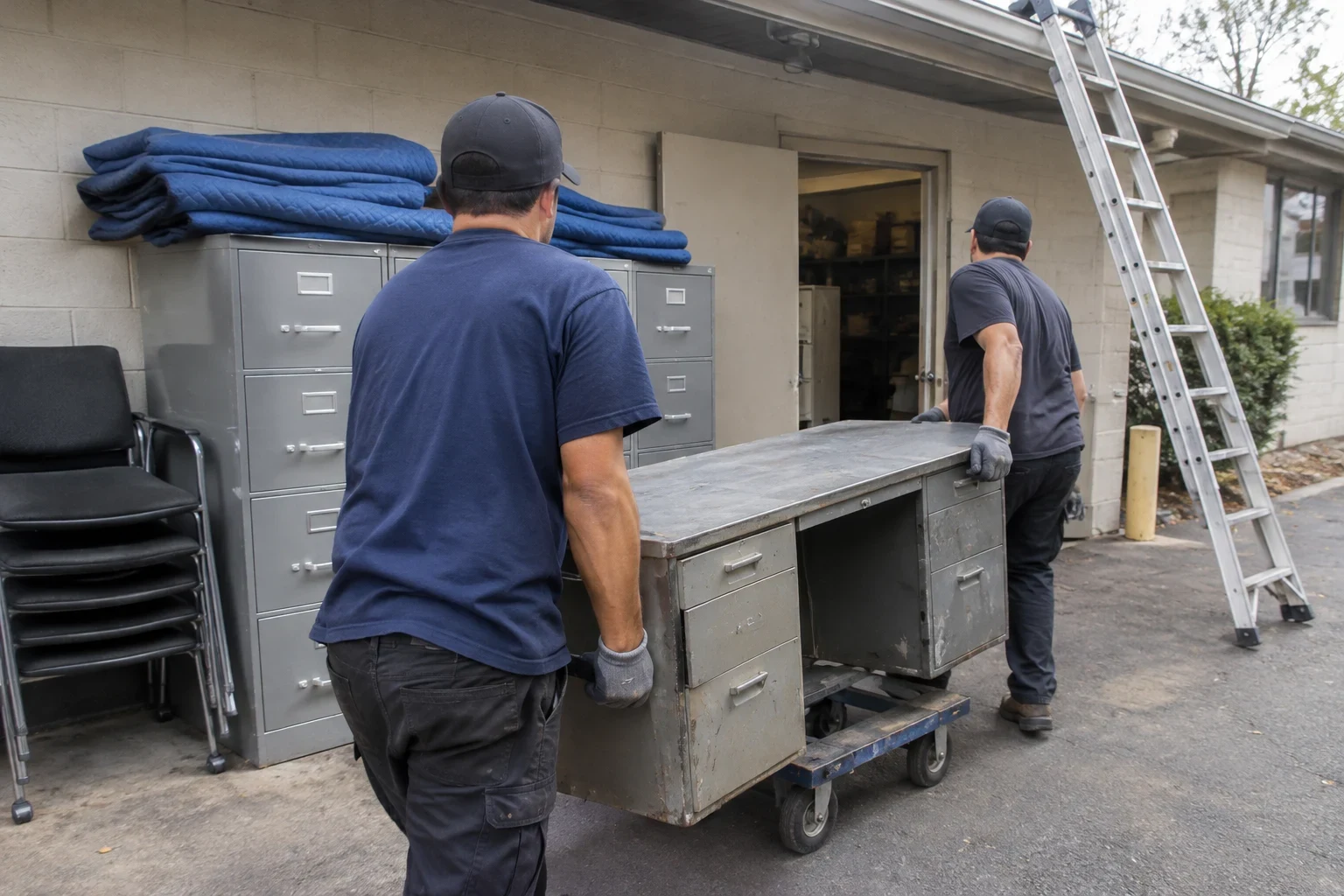
We clear old desks, cubicle panels, shelving, electronics and stockroom clutter from offices, shops and warehouses. Before anything goes on the truck, we walk the space, identify what needs a separate disposal route, and give you a free, no-obligation estimate based on what is actually there.
What Commercial Junk Removal Covers
Commercial junk removal is the right call when a business has more than a few items to clear: a suite being vacated, a retail floor being reset, a warehouse mezzanine full of broken racking, or a back room nobody has opened since the last remodel. The volume is larger than a typical pickup, and the mix is harder. One office can hold steel filing cabinets, particleboard desks, CRT monitors, laser printers, fluorescent tubes and a break-room refrigerator.
That mix is why we look before we lift. In California, most electronics with screens or circuit boards are classed as universal waste and cannot go to a landfill. Fluorescent tubes contain mercury. A refrigerator holds refrigerant that has to be recovered. If those items get thrown in with general debris, the load gets rejected or the job has to be redone. Sorting it correctly on the walkthrough means one trip, one bill and no surprise left behind on your dock.
What the Work Includes
- Walkthrough and itemized scope
- We look at every room or bay you want cleared and list what is there by type: metal, wood and laminate, electronics, appliances, general debris. That list becomes the estimate, so you can see exactly what is being removed.
- Disassembly of fixed items
- Cubicle systems, bolted shelving, pallet racking and built-in counters often have to come apart to fit through doors and elevators. We bring the hand tools and drivers to break them down instead of forcing them out and damaging walls or door frames.
- Electronics and universal waste separation
- Monitors, computers, printers, copiers and tube lights are pulled out and kept apart from general debris so they go to facilities that accept them. We tell you on the walkthrough if anything falls outside what we can take.
- Recycling and donation sorting
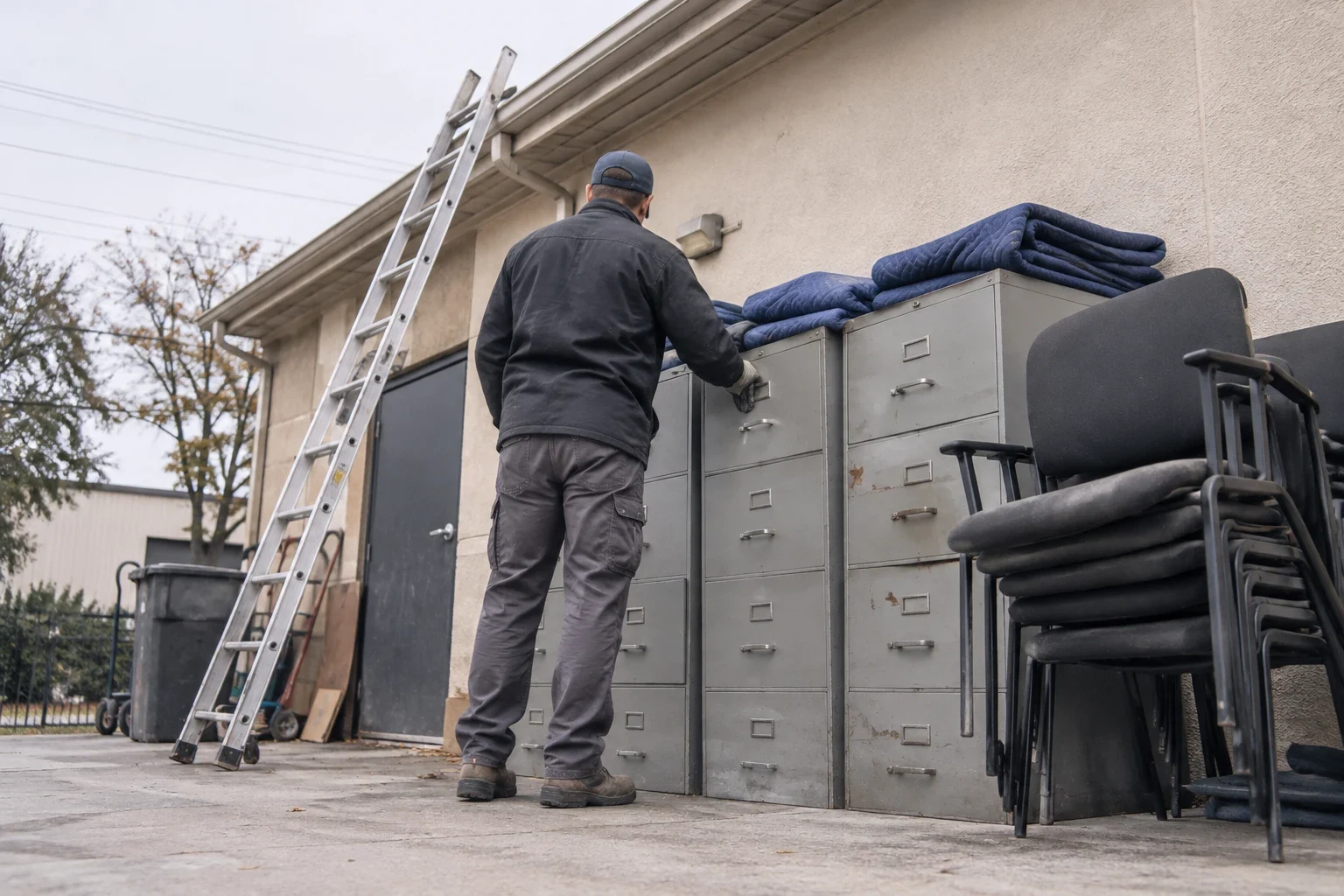
- Steel desks, filing cabinets and racking go to metal recycling. Usable chairs or shelving in good condition can be set aside for donation where a charity will accept them.
- Sweep-out of the cleared area
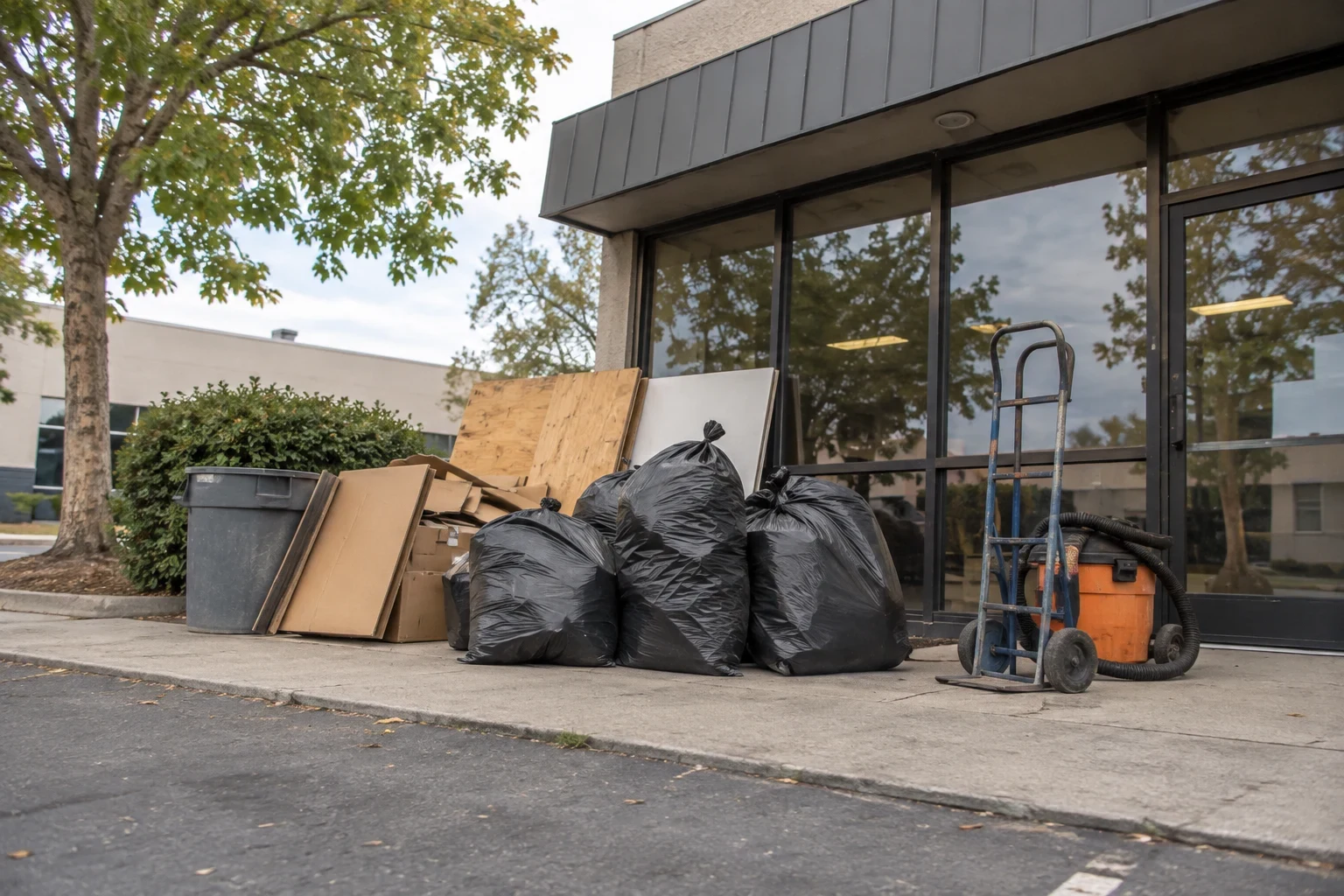
- Once the space is empty we sweep the floor, so the next tenant, contractor or crew starts with a clean area.
Signs Your Business Needs a Cleanout
A lease end or move date is set
Most commercial leases require the space returned empty. Leftover furniture and fixtures can be deducted from a deposit or billed back, so it pays to schedule removal before the final inspection.
Old electronics are piling up
Retired computers, monitors and printers stacked in a closet are a common sign. They cannot legally go in the dumpster, which is usually why they stay there.
Storage is blocking work
When broken fixtures or obsolete inventory crowd aisles, exits or the loading area, they slow every shift and can create a fire-access problem.
A remodel or reset is coming
Contractors price their work on an empty space. Clearing it first keeps their crew from billing hours to move your old fixtures.
Your dumpster keeps overflowing
If bulky items regularly exceed what your waste service picks up, a single planned haul is often simpler than repeated extra pickups.
What Moves the Cost
Commercial pricing comes down to how much space the load takes on the truck, how hard it is to get out, and where each part of it has to go. We price from what we see on the walkthrough, not from a guess over the phone. Upfront pricing, no surprises: the estimate shows the items and the handling before you commit.
Volume and weight
Truck space is the main driver. Dense loads like steel shelving or paper records are heavy for their size and cost more to dispose of than the same volume of light material.
Access and distance
A ground-floor shop with a dock loads quickly. A third-floor suite with a shared elevator and a long walk to the street takes more labor time.
Disassembly
Cubicles, racking and anchored fixtures need to be unbolted and broken down first, which adds time compared to loose items.
Special-handling items
Electronics, refrigerant appliances and fluorescent tubes go to specific facilities that may charge their own fees, which we list separately on the estimate.
How a Commercial Job Runs
- 1
Phone call and walkthrough
You call, describe the space and the timeline, and we set a time to walk it with you. We note access details like stairs, elevator size, dock height and where the truck can park.
- 2
Written scope and estimate
You get an itemized estimate that lists what goes, what is recycled and anything that needs special handling. Nothing is loaded until you agree to it.
- 3
Scheduled removal
We set the work around your business hours so customers and staff are not stepping around our crew. In summer we often start early to keep heavy lifting out of the afternoon heat.
- 4
Sorting, loading and sweep-out
Items are broken down, sorted into their disposal streams and loaded in order. Before we leave, we walk the space with you and sweep the cleared area.
Commercial Junk Removal Questions
Do you take old computers and monitors?
Yes. We separate them from general debris and take them to facilities that accept electronic waste. Before pickup, remove or wipe any hard drives that hold business data, because our job is hauling, not data destruction.
Can you work around our business hours?
We schedule with you when we set up the walkthrough. Many businesses prefer an early start or a slower day of the week so the work does not interfere with customers. We plan the order of rooms so the areas you still need stay usable.
What can't you take?
Liquid chemicals, open paint, solvents, fuel and similar hazardous materials need a dedicated hazardous waste route. We point these out on the walkthrough so you know in advance and nothing is left behind unexpectedly.
Do you serve businesses outside Sacramento city limits?
Yes. We work with businesses across Sacramento and nearby areas including West Sacramento, North Highlands and Florin. Mention your location when you call so we can plan truck access.
How is this different from your regular junk removal service?
Junk Removal covers household items and smaller loads. Commercial jobs usually involve more volume, disassembly of fixtures and more electronics, so the walkthrough and sorting plan carry more weight. For contractor waste from a build-out, see Construction Debris.
Clear the Space Once, Correctly
Call with the address, the rooms or bays involved and your move-out or reset date. We come look at the load, flag the electronics, appliances and tubes that need their own disposal route, and price it in writing before a single item leaves the building.